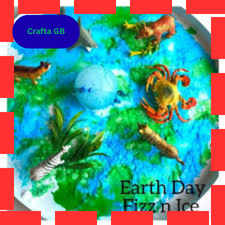

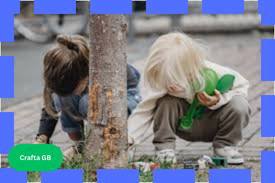
You said:
Earth Day Activities for Kids of All Ages
ChatGPT said:
Here’s a fun, age-inclusive list of Earth Day activities for kids of all ages, organized so you can mix and match for classrooms, families, or community events 🌍💚
🌱 Preschool & Early Elementary (Ages 3–6)
Focus: sensory play, simple concepts, fun
- Plant a Seed – Grow beans, herbs, or flowers in recycled cups.
- Nature Scavenger Hunt – Find leaves, rocks, sticks, or something green.
- Recycling Sort Game – Sort clean trash into recycle vs. trash bins.
- Earth Art – Paint with sponges, leaves, or recycled materials.
- Read Earth-Themed Books – The Earth Book (Todd Parr), Michael Recycle.
🌍 Elementary (Ages 7–10)
Focus: hands-on learning & responsibility
- DIY Bird Feeders – Use pinecones or toilet paper rolls.
- Upcycling Crafts – Turn boxes into robots or plastic bottles into planters.
- Clean-Up Challenge – Pick up litter at school, home, or a park.
- Water-Saving Experiment – Track water use for a day and find ways to reduce it.
- Earth Day Pledge Poster – Write and decorate personal eco-promises.
🌎 Middle School (Ages 11–13)
Focus: problem-solving & impact
- Carbon Footprint Quiz – Discuss ways to lower it.
- Eco-Science Experiments – Compost jars, erosion demos, or water filtration.
- Advocacy Posters or Videos – Create messages about protecting the planet.
- Meatless Meal Day – Learn about food choices and the environment.
- Community Tree or Garden Project – Hands-on stewardship.
🌏 High School (Ages 14–18)
Focus: leadership & real-world action
- Organize a Clean-Up or Recycling Drive
- Debate Environmental Issues – Climate change, plastic bans, renewable energy.
- Eco-Audit – Evaluate school or home energy and waste habits.
- Social Media Awareness Campaign – Share facts and solutions.
- Volunteer Locally – Conservation groups, community gardens, animal rescues.
♻️ All-Ages Activities (Great for Families!)
- Nature Walk + Journaling
- Screen-Free Outdoor Day
- Cook a Sustainable Meal Together
- Create an Earth Day Mural
- Watch a Kid-Friendly Nature Documentary
🌼 Tip for Adults & Educators
Keep Earth Day positive and empowering—focus on what kids can do rather than what’s going wrong. Small actions add up!
If you’d like, I can:
- Tailor activities for classrooms, homeschool, or parties
- Create a printable Earth Day activity sheet
- Align activities with school standards or themes
Just tell me! 🌎✨
By messaging ChatGPT, an AI chatbot, you agree to our Terms and have read our Privacy Policy.
Don’t share sensitive info. Chats may be reviewed and used to train our models. Learn more
- Scavenger hunt

Going outside and enjoying nature is the ideal way to commemorate Earth Day. Give the children objects to locate on a worksheet to identify the natural world while you take them to a nearby park. Younger children can engage in sensory play with this, while older children can use it to hone their analytical skills. You may do this virtually if it’s not feasible in person. On Earth Day, some of the top national parks provide children with free virtual tours.
2. Check out the Smithsonian

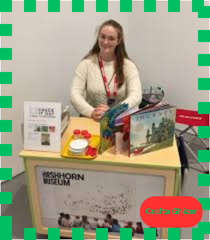
Here’s a quick tour of the Smithsonian Institution — what it is and what’s going on with it recently:
🏛️ What the Smithsonian Is
The Smithsonian Institution is the world’s largest museum, education, and research complex, based in Washington, D.C. It was founded in 1846 with money from the English scientist James Smithson, who left his estate “for the increase and diffusion of knowledge.”
- 21 museums and galleries plus the National Zoo.
- Vast collections include art, historical artifacts, scientific specimens, fossils, technology, culture, and nature — with millions of objects (though less than 1% is on display at any given time).
- Admission to most museums is free (except the Cooper Hewitt in NYC).
- The Smithsonian also operates research centers, education programs, and digital outreach around the world.
🖼️ Key Smithsonian Highlights
Here are some of its most famous parts:
- National Museum of Natural History – Earth’s natural world and history.
- National Air and Space Museum – Aviation and space exploration artifacts (some galleries newly opened after renovation).
- National Museum of American History – U.S. cultural and political history.
- National Museum of African American History and Culture – Dedicated to African American life and history.
- Smithsonian Castle – The iconic visitor center and headquarters.
- Smithsonian Folklife Festival – Annual cultural event on the National Mall.
📍 Visiting & Resources
- Most museums are on the National Mall in Washington, DC, with a few in New York City and elsewhere.
- You can plan visits, explore digital collections, or use Open Access resources online through their official site.
📰 Recent News & Context
- Changes to exhibits and content: Some galleries (e.g., portraits or presidential history exhibits) have seen updates that omit certain references like impeachments — part of ongoing exhibit reviews.
- Under political pressure: There are broader debates around how history is portrayed and what content stays or changes in exhibits.
If you’d like, I can suggest which Smithsonian museums are best for your interests (e.g., history, science, space, art) or show you how to explore collections online!
3. Grow your own

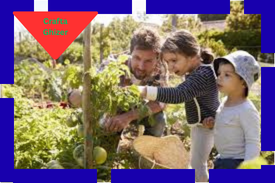
Grow some potatoes to teach the children about the origins of food and the importance of not wasting it. The children will be able to view all the development and the roots thanks to these window bags. Hopefully, after going through the entire procedure, they won’t take fresh food for granted and would take care to avoid wasting it.
4. Choose a book


Alright—I’ll choose one for you 🙂
📘 The Warmth of Other Suns by Isabel Wilkerson
Why this book:
- It reads like a novel but is deeply true history
- Follows real people, so it’s emotional and immersive
- Explains a huge part of American history (the Great Migration) in a human, unforgettable way
- Thought-provoking without being heavy or academic
If you want a different vibe, say the word and I’ll pivot instantly:
- 🧠 Mind-expanding: Sapiens – Yuval Noah Harari
- 🔍 Mystery/thriller: The Silent Patient – Alex Michaelides
- 🚀 Science & wonder: A Brief History of Time – Stephen Hawking
- 🎨 Art & culture: The Story of Art – E.H. Gombrich
Want fiction or nonfiction next?
5. Earth Day craft
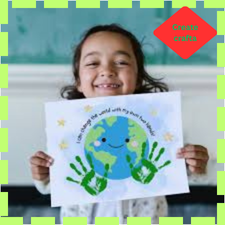
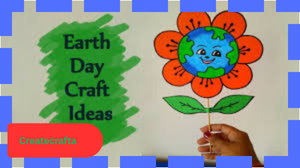
Ask the children to create an art piece using recyclable materials, such as egg cartons, cereal boxes, plastic bottles, and old magazines. Children learn a valuable lesson about recycling by participating in an art project that uses recyclable materials. For this Earth Day art project, once more, think about reducing, recycling, and reusing.
6. Coloring
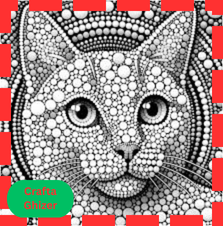

Do you mean coloring pages? 😊
I can help in a few different ways—tell me which you want:
- 🖍️ Printable coloring pages (animals, mandalas, kids, adults, holidays, etc.)
- 🎨 Coloring ideas & palettes (what colors go well together)
- 🧠 Coloring for relaxation / mindfulness
- 🧩 Color-by-number or educational coloring
- 📱 Digital coloring (apps or printable PDFs for tablets)
Just say what kind of coloring you’re looking for (and for kids or adults).
7. Learn about the Earth’s structure
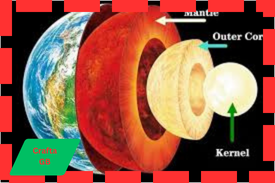
Here’s a clear, student-friendly overview of Earth’s structure, from the outside to the center 🌍
🌎 The Structure of the Earth
The Earth is made up of four main layers, each with different materials, temperatures, and roles.
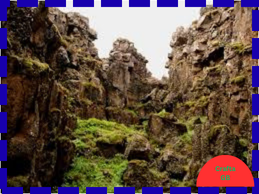
1️⃣ Crust (Outer Layer)
- What it is: The thin, solid outer layer where we live
- Thickness: ~5–70 km
- Types:
- Continental crust – land (thicker)
- Oceanic crust – ocean floor (thinner)
- Made of: Rocks like granite and basalt
👉 This is where mountains, oceans, and continents are found.
2️⃣ Mantle
- What it is: A thick layer beneath the crust
- Thickness: ~2,900 km
- Made of: Semi-molten rock (magma)
- Temperature: Very hot
👉 Slow movement in the mantle causes plate tectonics, earthquakes, and volcanoes.
3️⃣ Outer Core
- What it is: A liquid layer
- Made of: Molten iron and nickel
- Temperature: ~4,000–5,000°C
👉 Movement in the outer core creates Earth’s magnetic field, which protects us from harmful solar radiation.
4️⃣ Inner Core (Center)
- What it is: A solid sphere at the center of the Earth
- Made of: Iron and nickel
- Temperature: ~5,000–6,000°C (as hot as the Sun’s surface!)
👉 It’s solid because of extreme pressure, even though it’s very hot.
🧠 Simple Layer Order (Outside → Inside)
Crust
Mantle
Outer Core
Inner Core
If you want, I can:
- 🧒 Explain this for kids
- 🖍️ Create a coloring diagram
- 🧪 Add fun facts or experiments
- 📚 Turn this into exam notes or a quiz
Just tell me! 😊